Regardless of religious affiliation, there are things that are being learned about congregational stewardship that can be of great help to us—particularly in managing the realities of today’s economy. There is much wisdom to be gleaned from current research about congregational giving, fundraising, and stewardship.
Stewardship is a ministry. It is much broader in scope than fundraising, and requires a highly relational and pastoral approach.
All of the resources of the congregation or faith community are involved in the broadest scope of stewardship: money, property, people, time, and energy.
Hospitality, careful tending and management of resources, and a clear vision and mission are key aspects of stewardship in the congregation.
Giving and generosity are matters of the spirit and are at the heart of stewardship.
Giving is a spiritual discipline at its core, a practice that reflects one’s faith as well as spiritual depth and maturity.
Becoming a generous person involves a lifelong, developmental process which begins in infancy with receiving love. Generosity evolves with mutually-reinforcing experiences of giving and receiving.
There is a direct relationship between one’s deepest held values and the motivation to give. We contribute our time and resources to those things that matter most in our lives, as reflected in our bank statements and budgets.
Our religious leaders—particularly ministers and religious educators—must take an active role in modeling and teaching good stewardship in order for the concepts and principles to take root in their congregations.
Regardless of the economic context, congregations with the highest household giving levels focus on an inspiring mission and vision, engage in a visible, year-round stewardship program, and ask for levels of financial support that are proportionately appropriate for each individual or family.
Generous congregations provide a safe environment in which to talk about money and its role in peoples’ lives. They offer training and support in personal financial planning and giving choices so that generosity can be practiced.
Generous behavior in faith communities is often expected but cannot be taken for granted. It is important to express appreciation and gratitude for all that people contribute and for all gifts received.
For more resources to promote generosity among individuals and households in your Unitarian Universalist congregation:
The Holiday Season is filled with celebrations of light, love, and community. This is the time for honoring religious traditions and practicing the rituals of the faithful. As we move through the end of the year and across the threshold of the winter solstice into the new year, we are inspired by the impulse to give. In our religious communities, this often occurs through the offering in the context of worship.
The offering has been the central act of worship for human beings since ancient times. In the earliest times, sacrificial offerings of the best livestock or first fruits of the crop were ceremonially given to the gods. In modern times, money is placed in the offering plate during Sunday morning service to support the work of the faith community. Throughout time the offering has been a way for individuals and families to contribute some of what they have to benefit their community. Making an offering is considered an act of faith: faith in the community, faith is something greater than oneself, and a tangible expression of gratitude for all received in life. In its deepest and purest expression, the act of giving out of a sense of gratitude, is a spiritual practice.
Over time, this practice of the offering has been institutionalized by religions around the world. The concepts and practices are explicitly taught in many religions. In her book Giving—the Sacred Art, Lauren Tyler Wright refers to the practice of giving that each faith tradition brings to the “table of generosity.” She continues by describing the language and expressions of giving to religion:
Each tradition brings to the table a beautiful history of sacred texts, stories, and experiences, and each faith contributes to the intricate landscape of religious giving with a beautiful assortment of expressions: stewardship, almsgiving zakat (alms tax), sadaqah (voluntary charity), dana (charity), charity, Chesed (loving kindness), Tzedakah (righteous giving), tikkun olam (repairing the world). As I write, I imagine this wide variety of religious perspectives engaging in dialogue, not debate. While we may disagree on a host of ideologies, we can all sit around the table of generosity and share our understandings of this common practice. And in doing so, I have a feeling we will discover that our spiritual journeys are more alike than we may have thought.
Though religion continues to be the beneficiary of the largest share of charitable giving, it is losing some ground as giving increases to other charitable organizations. Once the recipient of 60 percent of all charitable giving, for the first time in recorded history, giving to religion has dropped to just under 33 percent. It appears that the competition for charitable dollars is heating up and religious leaders and consultants are asking, why? What makes the difference for people in choosing where to give?
Church fundraising consultant and former parish minister, J. Clif Christopher, is convinced that religious organizations must develop appropriate fundraising strategies using current methods to keep pace with their missions and financial needs. These strategies and methods will need to include greater involvement by the minister and board leaders in active fundraising and teaching of stewardship. More analysis must take place for each congregation to better know and understand its donors, their patterns of giving, and their capacity for giving.
Finally, it is essential that religious leaders know how to effectively ask for contributions and to communicate with donors in compelling, energizing ways all through the year. In other words, we need to get better at inviting generosity that brings joy to the giver!
We know from an array of studies that people who regularly attend religious communities give more. Givers give more when they are influenced by experiencing a generous culture. People are more generous when they learn how to give according to their religious teachings, observe generous behavior, feel gratitude for their community, and have opportunities to talk about money and giving as expressions of their faith values. Religious communities must be intentional about creating this kind of culture and learning experiences.
According to Christopher and others, the three primary reasons people give to congregations and other organizations are:
1) Belief in the mission of the organization,
2) Regard for the staff leadership of the organization, and
3) Fiscal responsibility.
In addition, people clearly want to make a difference in the world, to change lives for the better, and to leave a legacy that reflects this desire and to instill a sense of accomplishment.
Faith communities today have a big job to do—to change lives. We must focus on the task of changing lives and making a difference in the world, beyond the doors of the congregation day in and day out. This level of change cannot be accomplished by busying our members with committee work and social activities, then telling them there is not enough funding and more money is needed to keep it all going.
How will your community change peoples’ lives and make a difference in the world as we move into the new year?
The Giving Speaks blog is pleased to share another guest post by K. Peter Henrickson of the Pacific Northwest*
We all want to be generous people, and most of us want that quality to be present in those we hang out with — particularly in our churches. But what does that mean? What observable differences will we see around us when a spirit of abundance abounds? To bring focus to how an abundant attitude might shape congregational behavior let’s consider three specific examples in church life: the worship service, the coffee hour, and our special programs.
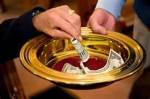
What happens in your church when the collection plate gets passed each Sunday morning? In many Unitarian Universalist congregations it sails along without so much as a stutter stop until it reaches the end of the row, and then after some twisting and reaching starts again and gathers speed as it scoots back, seemingly with a life of its own. Each week a large portion of those present contribute neither cash nor check, particularly as more and more make their pledge payments online.
Why is that? Put differently, what are we telling ourselves about this weekly request for money? I think for many the internal monologue is that this plate routine is irrelevant since we already pledge to support our church; it is a somewhat bothersome distraction from our worship therefore. But we tolerate The Plate Thing because, after all, there are visitors among us, or perhaps “those who should be pledging more.” We tell ourselves that passing the plate is just another way the church has of reaching into our pockets. But, we continue, our pledge is already quite fair, even Quite Good — and anyway we’ve decided already what we will give annually and want to be respected in our judgment about what is right for us.
Further, there are ccongregation leaders who announce before the plate is passed “If you’re a visitor, this is not for you. You’re our guest; just send it on.” This reinforces the subliminal sense that the Sunday offering is a tax imposed to punish the members who didn’t cough up enough during the budget drive, apparently all of us who attend regularly.
Finally, all Unitarian Universalist congregations budget some level of support from fund-raisers and other gifts above and beyond pledge income, most frequently including an increment from Sunday plate collections. This can confirm our self-talk narrative that “Folks around here are not very generous. They don’t pledge nearly enough to support our programs — but I’m not about to do it all myself.”
All our self-talk on the subject slips past the most important aspect of the Sunday collection: It’s Not About the Money. Well, it is. But more so, it isn’t.
So, what’s it all about?
When we worship together we are learning, remembering again what about our life is important. Much of our worship learning comes out of our sacraments and rituals. We are practicing being “in the present” and taking personal oaths. We are aspiring to be even more the kind of person we think we can be, and learning that that person is right there before us, within our reach. We worship to practice reaching. (And no one, I daresay, visits a new congregation hoping to be told they are excused this morning from reaching for their better selves.)
We include a request for gifts in worship because all of us, back into the Mists of Time, have felt the impulse to be helpful to others. But we balance that against the need/desire to take care of ourselves. And, for most of us, the Self comes first. Part of the worship practice is simply to remember that others need to be cared for just as we sometimes need to be cared for, and the taking of a collection is the community’s vehicle for delivering that reminder.
Passing the plate is *just* a ritual. The ritual reminds us that we always have the ability, even with pocket change, to help others. It’s not about the church needing more money. It is not particularly about an amount of money. But the ritual is emphatically about putting money in the plate. Passing the plate is about what we need — affirming that we live an abundant life. And for those who have been unresponsive in the past we want to promote new self-talk as the plate comes nearer. How can we do this?
Many churches have taken up a Share the Plate program, deciding that some portion of the collection will be designated specifically for causes and people outside the immediate church community. The church decides that part of every worship collection will be given away: say, one-quarter, one half, or even all. In some churches the gift is limited to one Sunday each month, but is the entire collection. In any case the self-talk previously described loses traction. We are asked to respond to a cause beyond our own congregation, its woes and our story about our place in them.
CHECK OUT THE GIVING SPEAKS POLL ON THE TOPIC–at the link below**
My own preference is to give away a smaller portion if necessary, but out of every collection; this seems to me a surer way of limiting the opportunities to dwell in scarcity while we worship. In any case most churches that have tried sharing their plate collection have not stopped. They report no diminishment in their own income, and frequently an increase. This is the experience reported by Rev. Neal Jones in this space last month (http://wp.me/p1xUUk-iU ) in support of his contention that congregations which practice abundance experience abundance.
Another possible way your congregation can manifest a generous countenance is, for example, during social hour after the service. Is there a basket near the coffee urn where people are expected to place a donation for their coffee? Get rid of it. If your church is like mine you pick up a tenth of one percent of the total church revenue for the year from that basket. One additional pledge would equal three or four years of take from the coffee basket. Instead, try putting up a little sign saying something like:
WE’RE GLAD TO SEE YOU.
COFFEE IS ON US.
We happily cover the costs of our Social Hour out of your generous contributions during worship. Thank you.
This is a way for the congregation to openly celebrate its generous, attractive spirit. It undercuts the story, above, that this church “always wants more of my money.” At the same time it suggests yet another reason for all worshipers to think about dropping something into the plate every week while also taking away a reason for holding back (“for the coffee basket”).
Third, consider the attitude your congregation manifests when charging members for programs and services. While I am sympathetic to the reality that churches need to raise enough money to cover their costs, I am less inclined to the notion that every cost which can be separately identified and assigned to a sub-group should be. I was once a member of a Unitarian Universalist congregation which decided that people could pick up their own newsletter copies in the church lobby on Sunday morning; if they wanted them mailed there would be a fee to cover postage. The same office administrator proposed that members pay for the church directory — “enough to cover copying costs”.
These are extreme examples I hope, but they highlight the point. When we join a church we expect to enjoy core services in return for our fair pledge. The problem is in agreeing what the core consists of. A church thriving with an attitude of abundance will look for ways to expand its definition of core programs and services; the congregation dwelling in scarcity finds it necessary to charge extra fees. It’s simply not worth giving up an abundant spirit to chase even a few hundred dollars.[i] A church with a countenance of abundance holds itself freely open to all — while openly displaying its desire to have all fully embrace its abundant life, including, of course, embracing abundant financial support.
[i] Alternatively, some churches find that by charging a modest fee for programs they induce a higher commitment to attendance; I suspect there is truth in this observation and recognize that some programs by their nature are more successful when attendance and participation are highly predictable.
**FIND OUT WHAT OTHER CONGREGATIONS ARE DOING ABOUT SHARED OFFERING PROGRAMS!
Participate in this Giving Speaks poll:
________________________________
*K. Peter Henrickson lives in Vancouver, WA has served the Unitarian Universalist Association (UUA) and its Pacific Northwest District for over 30 years. Peter served two separate terms as district treasurer for a total of 15 years. During that period, he began consulting with congregations on general financial management issues. With the learnings from those consulting jobs, Peter put together several presentations for both district meetings and the Unitarian Universalist Association’s General Assembly. And the material from those workshops grew into a book, Church Financial Management, which is now available through Amazon. Peter has served on the Board of Eliot Institute and was Treasurer for a total of about ten years and has served as the UUA’s District Compensation Consultant since 2005. Peter can be contact directly at: kphenrickson@gmail.com (360) 608-8571







 givingspeaks.com