Nurturing Generosity in Children

Featured

The future of society may depend on our ability to make sure our children have the capability for empathy and the inclination toward generosity.

~Patricia O. Bjorhovde


Religious teachings have been highly influential in the development of philanthropic culture and giving practices around the world. Throughout American history, religious philanthropy has prompted social change by addressing the major issues and ills facing society of the times.

Congregations and faith communities fill an important role in today’s society by providing the worship and learning environments to convey the virtues and values of generosity, giving, stewardship and volunteer service. These communities provide a set of religious values and theological teachings to which young learners can link and reflect upon their daily lives. This is part of a our faith formation process as human beings, continuing throughout our lifetimes.

There are three key ways that children learn about generosity and stewardship:

  • Modeled voluntary behavior by a parent or trusted care-giver with the intention to help others. This begins in infancy, through the infant’s experience of caring and sharing which leads to the development of empathy.
  • Cognitive learning opportunities that include thinking, reflection, and discussion on the part of the learner. These stimulate understanding of the cause and effect of giving behavior.
  • Experiential “learning by doing” on the part of the learner—opportunities to engage in giving and serving activities from which they can draw emotional satisfaction and meaning.

How is this done?  Through an intentional educational process that includes:

  • Presenting the concepts and stories that promote understanding of giving, generosity, and stewardship in the life of a community.
  • Identifying the reasons why people choose to give and practicing generosity, and the methods for stewardship and the careful tending of resources.
  • Providing the experiences and opportunities for individual and communal reflection.

Nathan Dungan, former financial advisor, marketing VP, author and creator of the Share, Save, Spend system for personal finance suggests that the marketing message directed at our children is “see money, spend money,” with the emphasis on the micro impact  of satisfying their own needs. They rarely get the macro impact message that balances their spending with saving and sharing in intentional ways:  “the choices we make with our money can change the world.”

There are a variety of helpful materials to help parents and educators create learning experiences and activities that nurture generosity and stewardship in their children and teenage youth. Games and stories, combined with experiential activities to learn these values by doing, are particularly effective teaching tools. The Stewardship Game and links to online resources below offer a starting place for engaging this learning process.

Enjoy! 
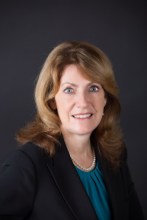


Laurel Amabile, CFRE

Giving Speaks


STEWARDSHIP RESOURCES FOR FAMILIES:

Lodestone Year: Money Unit–Magnetize your Middle School  curriculum by Katie Covey focusing on ways to provide fun and as well as deep teachable moments. The Money Unit focuses on the value of conversations about money as an important part of understanding the control and power of money. With this understanding, commercialism is kept in perspective and money is used as a reflection of one’s values.

Stewardship Game for Unitarian Universalist Children & Youth created by Dr. Bobbie Poole, Credentialed Religious Educator, Master Level (shared with her permission). email:  bobbiepoole@comcast.net

The_Stewardship_Game_Rules    

Stewardship_Game_Board

Stewardship_Game_Cards

Tapestry of Faith the Unitarian Universalist Association’s online curriculum series, particularly the Moral Tales for children and Virtue Ethics for youth.  http://www.uua.org/re/tapestry/children/tales/index.shtml and  http://www.uua.org/re/tapestry/youth/virtueethics/index.shtml

Learning To Give features learning and teaching resources to use for all ages, with focused materials for school educators and religious educators.

Share, Save, Spend founded by Nathan Dungan / The website features articles, tips, and resources for all ages, particularly useful for parents, educators, and organizations.

National Center for Family Philanthropy 

Bjorhovde, Patricia O., Editor.  Creating Tomorrow’s Philanthropists:  Curriculum Development for Youth New Directions for Philanthropic Fundraising, #36, Summer 2002, Jossey-Bass Nonprofit and Public Management Series, Wiley Periodicals, Inc.


Developmental Stages of Generosity

Ideas for Raising Stewardship Awareness in Your Congregation

Giving Speaks is pleased to share this guest blog post by  Rev. Dr. Daniel O’Connell*

The participants of the UU Stewardship Lab (Facebook group) were asked for their topic suggestions for a stewardship essentials workshop that may be offered at a future denominational event, Rev. Daniel O’Connell quickly responded with his suggested workshop theme

“Don’t Miss Stewardship Workshop:  You will learn about at least 3 new ideas to increase stewardship consciousness at your church.”

Then Daniel generated a few ideas to get our creative stewardship juices flowing….

Ideas for Raising Stewardship Awareness in Your Congregation

Holiday Wish List

Have 3 outside-the-budget items you want to finance. Not 2, not 4, but 3. Total cost: $10,000 (your dollar amount will vary with your congregation’s size). One item should be less than $2,000. One item should be no more than $6,000. One item should be a no-brainer (We need a defibrillator AED). One item should be immediately noticeable by anyone (new tables & chairs for the fellowship hall). Publicize the list (with pictures or drawings), put up a poster. The 3rd item could be priced between the first two, and be something you really need (faster church internet connection) that otherwise might be difficult to raise money for. Let people know the goal is $10,000, and when we get there, we’ll acquire all three things. Give periodic updates. Start mid-November and finish by the end of December.

Leadership Funding for Special Projects

Imagine your congregation would like an additional $20,000 to supplement your half million dollar budget this year.  The Senior Minister goes to the board with a pledge for $1,000, with a request for the Board members to collectively to triple that amount. On the following Sunday, it will be announced that $4,000 has been raised toward the $20,000. Leadership gifts are important. It shows the leadership is serious.

Clear Steps to Stewardship

The congregation leaders must cast a vision for a clear, step-by step path to a sense of stewardship with deep values and intention. It goes like this: become a first time giver. Then, become a regular giver. Then become an automatic payment giver.  Then, a percentage giver.  Each year increase that percentage until you get to 5%. Anything over that, we’ll call an “extravagant giver.”  The congregation leaders and senior minister should exemplify this level of personal stewardship and let the congregation know the level of their financial commitment.

Going all the Way with Percentage Giving

Did you get a year-end bonus? A teacher merit bonus? Make some money off your garage sale? Give 5% to church.  Every time. Make it a spiritual practice. Honor those who make this commitment.

Include the minister’s and other lay leader’s journey to becoming a percentage giver as part of canvass testimonials or as a regular newsletter feature. How they went from zero to 5%, and why they did it.

Generational Giving

Maybe once a year (maybe less) remind people that parents can give their children tax-free gifts of up to $13,000 (each parent) without triggering IRS Gift tax form 709.  So, if you have 30-50 year olds in your congregation, have them tell their parents about this. Chances are your members would rather have the money now than after their parents have passed on.  If they do get such a gift, encourage them to give 5% of that gift to the church.

Reverse Offering

This is designed to move away from scarcity consciousness toward abundance.  Take $1,000 in $50 dollar bills and put them in 20 different envelopes with an index card.  The index card says that they have to spend this on a social justice project, and write a one-page history of what they did with the money and how they feel now. Give a few examples:  the money was spent on postage for solicitation letters for a special charity or $50 of postage brought in $2,000 of gifts. It doesn’t benefit the church directly, but imagine 10 really good stories out of the 20.  Stories about how the power of creativity and ingenuity led to unexpected benefits for strangers in need.

Raffles

Get an iPad 3 or big screen TV cheap.  Sell tickets over two weeks, do the big reveal at coffee hour.  Do this a couple of times per year. This builds excitement.

Flattening the Pledging Curve

Encourage people to sign up for auto-paying their pledge and let them know how this helps to smooth out the annual income curve while sustaining the congregation’s financial picture.

Why Girl Scout Cookies Are Good For You

Some people frown on the sale of Girl Scout cookies in the fellowship hall. Put as many Girl Scouts as want to do this at the same table. It is very meaningful for the girls, the adults like the cookies, and it builds abundance consciousness and stewardship into everyone.

Multiplying your Justice Impact

Sharing the offering with other charitable organizations or community partners can often double plate income and dramatically increases the amount of money your congregation will give away to other charities.  Another benefit many congregations with offering give-away programs experience is an increase in overall giving to the congregation.  People feel good about making a difference with their giving!

Put it in Writing

People are more apt to fulfill a pledge to annual giving than not.  That is why asking all members and friends of the congregation to fill out a pledge form, even those who say they cannot give anything that year to write ‘zero’ down on their pledge and turn it in.  Being intentional about one’s annual giving is a good habit to get into, even in the challenging years.

Rewarding Good Stewardship

A year ago, we sent out a form letter at the end of the canvass thanking people for pledging. This does not recognize good behavior! This last year, as Senior Minister, I sent a personal letter to everyone who made a pledge increase.  I sent another to everyone who made a pledge for the first time.  I did so as soon as we got their pledge in.  I got a note from someone saying they’d been pledging for 20 years and this was the first time they got a letter from the minister thanking them for it. Needless to say, I’m doing that again this year.

Assume Insufficient Motivation Rather Than Insufficient Funds

Are your congregation’s lay leaders are up for the annual financial challenge?   Whether that’s a canvass increase,  special project, or whatever.  When people hint around they don’t have the money, it may be due to insufficient motivation rather than insufficient funds. Of course, sometimes it is about money, but many times it was because the funding idea was not sufficiently attractive. So, it may be time to postpone or shelve an idea or try other ones, instead of giving up altogether.

Alternatives to the Traditional Canvass

Some congregations are doing away with the traditional canvass. They assume you’ll pledge this year what you pledged last year, and they send you a letter to that effect.  Others canvass only a percentage of the congregation: maybe 1/3 of the top half, with a different group every year, restarting the cycle again in the 4th year.

__________________________________________

*The Rev. Dr. Daniel O’Connell serves as the Senior Minister for the First Unitarian Universalist Church of Houston, Texas (http://www.firstuu.org/), which is one of the Unitarian Universalist Association’s 10+ year Honor Congregations for their generous financial support of their wider faith community. (www.uua.org/giving/apf )

Daniel O’Connell grew up Unitarian Universalist in suburban Maryland, outside of Washington, D.C. He was active in the youth movement (LRY in the late 1970s) and in the emergent Young Adult movement (UUYAN), both at the regional and national levels before attending seminary in 1992.  He has served congregations in Connecticut, regional and national level both in the UU Ministers Association and with the UUA on district boards during most of the last 15 years.  Daniel can be contacted directly at:  daniel@firstuu.org

Unitarian Universalist Stewardship and Finance Leaders can find an online support network through the following links:

Facebook UU Stewardship Lab:  http://www.facebook.com/groups/UUStewardshipLab/

UU Money Leaders email list:  http://lists.uua.org/mailman/listinfo/uu-money

The Forward Through the Ages (FORTH) Program:  http://www.uua.org/finance/fundraising/forth/development/index.shtml

Gathering the Abundance: Stories and Transformation

This is a resource for engaging our congregations in telling their stories as a way of interpreting and fulfilling their missions, by Rev. Naomi King~

A good inspirational story invites the listener into an emotionally laden conflict and brings the listener into a place of hope, joy, commitment, and/or encouragement.  When we read stories or hear them, each story reveals its emotional content.  We can only find that if we 1) observe the person telling the story and what emotional signals they are presenting and 2) observe our own reactions to the story and the emotional signals within ourselves.

How may we interpret our mission in the stories of our congregations and our cultures of giving?

First, refresh yourself with your congregation’s mission.  What is the story it is telling us?   What challenges does the mission present us?

Second, What’s the conflict in the story?  For example:

a)  We have not been engaging in social justice activities that reflect our deepest values and priorities as a congregation;

b) We’ve needed people who understand the ways to stand on the side of love and commit to leading the way;

c) We don’t have the money do all that we need in order to accomplish our social justice mission in the world.

Third, how might the conflict be resolved?

a) Offer a new model or alternative perspective as a solution to the problem or conflict;

b) Provide examples of real people who’ve made a difference through their contributions, both in their efforts and their resources;

c) Find donors willing to make matching or challenge grant to stimulate heightened giving and involvement.

Fourth, draft a way to retell a brief and pithy version of the story that uses descriptive language and imagery.  Bring the story to life!
Fifth, how does the story affect our congregation?

____________________________

The Emotional Arc:  Story and Transformation

Every story has encapsulated within it a conflict.  Every conflict has emotions attached to it.  Inspirational stories invite the listener into emotional identification with the conflict and its heart-warming or hopeful resolution.  Every story has an emotional arc.  Inspirational stories resolve conflicts in such a way that the listener’s own emotions follow the emotional narrative of the story.

Some Emotional Arcs

Apprehension–fear–despair

Apprehension–surprise–hope–delight

Joy–confusion–grief–exhaustion

Uneasiness–wonder–happiness-commitment

Transformational storytelling requires the storyteller to discover the emotional arc of the current story, imagine a new story’s emotional arc beginning in the same place as the current story, and offering the new story repeatedly, to guide the listeners into another emotional state.  Some people call this reframing.  Effective reframing begins with the original story’s emotional beginning, but opens to a new possible ending.

For example, a congregation may frame its story in this way:

We are a poor church; we always have been and always will be. 

There are at least two possible arcs to this story which may influence the experience of the congregation:

1)  Pride–pleasure–contentment

2) Shame–defensiveness–resignation

Another example:

Our congregation has survived the tough times through good stewardship and a commitment to generosity.  We have great opportunities and energy; and we’ll find our way through!

The Emotional Arc begins with pride, then moves to joy, then to hope and heightened commitment.

And another;

We have been a church without many resources, but we’re different now.  We have a great program, lots of visitors, and a clear sense of mission.  We are on our way!

The Emotional Arc begins with shame, but moves quickly to hope, followed by confirmation, pride, and excitement.

____________________________

The Reverend Naomi King is a Unitarian Universalist minister who has served congregations in Maine, Texas, New York, and Florida.  Naomi’s virtual ministry has expanded through social networking to touch the lives of many around the world.

Rev. Naomi King was the recipient of the UUA’s Stewardship Sermon Award in 2005, for her sermon entitled Stand By This Faith, http://uua.org/worship/words/sermons/submissions/8790.shtml

To contact Rev. Naomi:

Twitter:  @revnaomi

Facebook:   http://www.facebook.com/RevNaomiKing

Linked In:  http://www.linkedin.com/pub/rev-naomi-king/1b/bb6/8a9