
Calling All Generations–ready, set, GIVE!

Friends Playing on the Beach

With each new generation coming into adulthood, cultures and patterns change. A recent Giving Speaks post Religion in the Age of the Nones (http://wp.me/p1xUUk-ms ) dealt with the significant changes and trends of decreased religious affiliation among younger adults. Just as important for religious and philanthropic organizations is to understand the differences among the generations when it comes to designing giving programs and fundraising appeals. One size does not fit all!

small-shoes In America there is an unprecedented transference of $40 Trillion in wealth occurring between the aging Mature and Baby Boomer generations and their children. It is essential that those who are raising funds to support charitable and religious organizations understand the varying approaches required in working with their donors in each generational cohort. Those in the Baby Boomer generation (born between 1942 and 1960) and the Mature Generation (born prior to 1945) were motivated to give for different reasons than young adults born after 1960. The elder givers are motivated to give to help meet the needs not met by governmental programs. They support religious and community organizations and are most comfortable responding to mail appeals and face-to-face requests. Baby Boomers are hearty supporters of secular causes. They give to religion, but at lower levels than their elders.

Trends and emerging giving patterns of younger adult donors are being studied, with what makes donors tickparticular attention being paid to the relatively small group receiving the largest share of the wealth and building their own net worth. These “Next Gen Donors” will be the philanthropists of the future and the major donors in America for several decades to come. It behooves all charitable, religious and philanthropic organizations to learn more what makes these younger, higher net worth donor prospects tick.

Philanthropic research over the past five years tells us is that Next Gen Donors (between the ages of 21 and 48) are generous people. These individuals want to know their contributions go to causes that matter most to them and move them emotionally. They take a “hands on” approach to their involvement with recipient organizations, because they want to know their charitable dollars are making the world a better place. Often this involves younger adults volunteering their time and talent as well as their money.

Among those in Net Gen Donors group, most of their charitable giving goes to secular causes, with less than half going to religion. This means that religious organizations must polish their stewardship strategies and employ current fundraising best practices, being much more proactive in their donor relationships. Next Gen Donors prefer online giving and are more comfortable with solicitation through social networking media channels. Their total annual charitable giving among younger adult donors ranges from $1,300 to $2,000 on average, and the levels most likely will increase over their lifetimes.

money online

Stewardship strategies and fundraising practices must be adapted to meet the challenges of greater competition for charitable dollars. Generation and technological trends must be taken into consideration when planning cultivation techniques and messaging for appeals.

Here are some generational characteristics and recommended fundraising approaches:

Youth_Haiti

Younger Adults (born mid-1980’s to present)

  • Think “multichannel” communication—mail appeals (hard copy), electronic appeals (email, e-newsletters), and online giving options (websites) are the top three channels for charitable giving.
  • Check-out donations—grocery stores, coffee shops, and businesses offering charitable giving opportunities with purchases.
  • Social media appeals from charitable organizations and religious communities with whom they have a relationship—ask your young volunteers and visitors for their contact information!
  • Peer-to-peer social, networking, and fundraising events—younger donor prospects like events that bring committed people together around causes and organizations of interest.
  • Encourage volunteer involvement and other ways of engaging in hands-on service and making a real difference in their communities.
  • Appeals that include information about the organization and its priorities, a request for a specific amount, and details about how contributions will be used, and a promise of quarterly progress updates.
  • Written appeals featuring the organization’s programs and services of greatest interest and relevance to younger adults, whether they are single, partnered, or parents of young children.

Middle-Aged Adults (born between mid-1940’s and late 1970’s) SSL Montclair
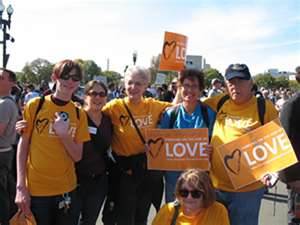
  • A large segment of this generational group came of age at a time of great idealism, anti-war and anti-establishment sentiments. Their idealistic fervor persists regardless political or religious affiliation.
  • Many are disenchanted with politics and religion, preferring to work hard for charitable causes that support grand moral movements, social justice advocacy, and hands-on service.
  • A good number grew up in families affected by divorce, high unemployment, and unsure financial futures. They tend to commit time and resources to strengthening relationships and communities.
  • Respond to mailed appeals and are increasingly comfortable with email appeals and online giving channels.
  • Check-out donations and charitable gift card benefit programs are effective giving options.
  • Appeal to their idealistic interests by featuring programs and services that address major societal issues and reform causes.
  • Peer-to-peer and in person meetings and community events are very effective in asking these adults for contributions.
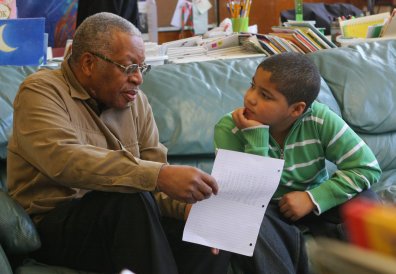
elder with youth Mature Adults (born prior to 1942)

  • Civic causes, philanthropic organizations, and religious institutions are important to older adults who came of age in America during the World War II.
  • Printed mail appeals with detailed content are the familiar approach for this group, and their giving response is strong. Mature donors prefer to send a check by mail to the charities of their choice.
  • Messaging that emphasizes giving back, fair share, and regular contributing language is effective in appeals.
  • Leaving a legacy matters–encourage planned giving as a means of strengthening the institution and its mission and core values for future generations.
women-building-pots-wall2

Resources on Generational Trends and Differences:

21st Century Faith Formation http://www.21stcenturyfaithformation.com/index.html

Bhagat, Vinay; Loeb, Pam; Rovner, Mark. The Next Generation of American Giving. March 2010. Convio, Edge Research, and Sea Change Strategies.

Campbell & Company. Generational Differences in Charitable Giving and in Motivations for Giving. Report prepared for the Center on Philanthropy. May 2008.

Chronicle of Philanthropy. Philanthropy 400 Reflects Generational Shift in American Giving. October 17, 2010. http://philanthropy.com/article/A-Generational-Shift-in-Giving/124937/

Giving Speaks blog posts on multigenerational giving and generosity, and by age group.

Johnson, Grossnickle & Associates. Millennial Donors: A Study of Millennial Giving and Engagement Habits. Achieve. 2010. The Millennial Impact Report. http://www.themillennialimpact.com/research-2012


Inspiring Generous Giving in Congregations: Antidotes to Donor Fatigue

origami money heart

     Fundraising is the gentle art of teaching people the joy of giving.   ~Hank Rosso

The members of our congregations make our faith what it is.  As one looks out into the pews, the faces you see possess an energy, commitment, intelligence and engagement matched by few other groups of individuals.  Along with their shared values and faith, each person that gathers together each week gives of themselves to make the celebration of this liberal faith tradition possible.  Some contribute their talents and expertise in leading the congregation to greater fulfillment of its mission; others contribute their wisdom and compassion in bringing forth the very best of their fellow worshipers.  Most also give generously of their wealth, whether great or small, to provide the resources necessary to support and grow the congregation that inspires them.

At times, however, these same individuals may experience what is commonly referred to as “Donor Fatigue,” a situation in which these supporting members reduce or entirely cease their financial support of the congregation.  Though certainly many household budgets have been challenged by the contracting economy, this drop in giving may be caused by any number of reasons: perhaps there is a lack of trust in the congregation’s ability to steward the resources effectively; concerns over inadequate staff, space, or budgets; or anxiety and conflict arising from differing theological perspectives or strategic priorities.

The Challenge of the Conversation:       

Frequently in our culture, the topic ofman-and-woman-talking-vector-illustration_Mkbp2Cwd (1) money and generous giving is effectively taboo, compounding the difficulty of addressing the concerns that the members of your congregation may be experiencing.  Your congregation can help to de-sensitizing the topic by talking about it to the members of your congregation in reflective, non-anxious ways:

  • Having a year-round stewardship program to connect the topics of money, giving, and faith in people’s minds can help to establish and cultivate openness to giving and generosity within their lives.
  • Establishing and communicating clear expectations for congregational membership and giving: a culture of generosity springs from an inspiring vision and high expectations for participation.
  • Facilitating conversations and small group discussions about money and its relationship to individuals, families, and the larger community can help in reducing anxiety in talking about giving and generosity.
  • Offer programs to help develop personal financial skills and decision-making about how one’s money can be used, such as personal finance sessions, debt reduction workshops, or introductions to planned giving.

Vision, Leadership and Accountability

People give to congregations for many reasons, both rational and emotive, that are unique to each person.  However, there are complementary themes that emerge from conversations with generous supporters of the work of heart and mind found in Unitarian Universalism.  You can (re)inspire your members’ generosity by addressing the three concepts of vision, leadership and accountability.

Finally, clarifying and communicating the vision of your congregation and the role that financial generosity plays in its ongoing well-being, active engagement of the ministry and lay leadership in stewardship processes, and recognition and accountability all play tremendously important roles in strengthening the stewardship activities of any organization.

Visioglobal-sight-world-vision-vector_GkJY-gv_n                                              

  • Clarify and be able to communicate the vision of your congregation and the role that financial generosity plays in its ongoing well-being.
  • People want to make a positive difference in the world and to be part of something that changes lives for the better.
  • Examine what the message for giving to the congregation is.  Is it inspiring?  Does it say “Live the Vision!” or “Pay the Bills”?
  • Help people to distinguish between expectations for charitable giving and demands of our mass consumer culture when it comes to the perception or sources of fatigue.
  • How does generosity and giving contribute to the formation of your congregation’s faith identity?  Does it express itself as a spiritual practice of generosity or a mandate of obligatory giving?

Ministry and Leadership

  • Examine the public perception of your ministry and leadership in their ability to bring the congregation’s vision and mission to life.
  • Donors choose to give to organizations that demonstrate their capacity with competent, effective, trustworthy, and accountable leadership.
  • How involved is the ministry in leading and promoting effective stewardship and generous giving within your congregation?
  • The lay leadership and staff can also play an active role in advocacy and stewardship, particularly if stewardship is integrated into leadership development training and workshops.

Recognition and Accountability

  • Support is given to organizations that are perceived to be strong, successful, and worthy of their gifts.  Fiscal responsibility is critical to a congregation’s stewardship success!
  • Report back to your membership on how contributions are used and the difference that has been made as a result of their generosity.
  • Thank people as often as possible and celebrate the achievements that they have made possible.

 S.U.C.C.E.S.S.!

Though exceptionally generous individuals may give unsolicited gifts to the organizations that they believe to be capable and worthy of their support, it is much more common that people must be invited to demonstrate their generosity.  Your members must be asked to make a gift to your congregation!

Making a compelling case to encourage their gifts further enhances the generosity that is demonstrated; helping your fundraising “ask” to resonate with people’s hearts and minds, inspiring their giving.  Elements of a compelling fundraising message include the following:

  • It is Simple:  Keep mission and values central to your message.
  • It is Unexpected:  A pressing need or barrier to overcome can pique donor interest.
  • It is Concrete:  Many people are motivated to support causes that lead to definite and tangible results.
  • It is Credible:  Not only is your congregation capable of carrying out the programs described, but they are likely to have the desired outcome.
  • It taps Emotion:  Your message should move the donor emotionally, with an inspiring message that offers opportunities for transformation.
  • It makes use of Stories:  Narratives and testimonies can readily convey and relate to people’s passion.
  • It is SURPRISING: How generosity touches lives and makes a positive difference in the world–celebrate!

Wishing you great success in your stewardship~


Laurel 2012


Laurel signature


Giving Speaks Consulting

For more information about donor cultivation, relationships, and motivation:

Giving – The Sacred Art, Lauren Tyler Wright (available at http://www.uuabookstore.org/)

Not Your Parents’ Offering Plate, J. Clif Christopher

Passing the Plate, Christian Smith & Michael O. Emerson with Patricia Snell

The Spirituality of Fund-raising, Henri J. M. Nouwen

“Fundraising Fundamentals” Blog:  http://fundraisingfundamentals.wordpress.com/


Nurturing Generosity in Children

Featured

The future of society may depend on our ability to make sure our children have the capability for empathy and the inclination toward generosity.

~Patricia O. Bjorhovde


Religious teachings have been highly influential in the development of philanthropic culture and giving practices around the world. Throughout American history, religious philanthropy has prompted social change by addressing the major issues and ills facing society of the times.

Congregations and faith communities fill an important role in today’s society by providing the worship and learning environments to convey the virtues and values of generosity, giving, stewardship and volunteer service. These communities provide a set of religious values and theological teachings to which young learners can link and reflect upon their daily lives. This is part of a our faith formation process as human beings, continuing throughout our lifetimes.

There are three key ways that children learn about generosity and stewardship:

  • Modeled voluntary behavior by a parent or trusted care-giver with the intention to help others. This begins in infancy, through the infant’s experience of caring and sharing which leads to the development of empathy.
  • Cognitive learning opportunities that include thinking, reflection, and discussion on the part of the learner. These stimulate understanding of the cause and effect of giving behavior.
  • Experiential “learning by doing” on the part of the learner—opportunities to engage in giving and serving activities from which they can draw emotional satisfaction and meaning.

How is this done?  Through an intentional educational process that includes:

  • Presenting the concepts and stories that promote understanding of giving, generosity, and stewardship in the life of a community.
  • Identifying the reasons why people choose to give and practicing generosity, and the methods for stewardship and the careful tending of resources.
  • Providing the experiences and opportunities for individual and communal reflection.

Nathan Dungan, former financial advisor, marketing VP, author and creator of the Share, Save, Spend system for personal finance suggests that the marketing message directed at our children is “see money, spend money,” with the emphasis on the micro impact  of satisfying their own needs. They rarely get the macro impact message that balances their spending with saving and sharing in intentional ways:  “the choices we make with our money can change the world.”

There are a variety of helpful materials to help parents and educators create learning experiences and activities that nurture generosity and stewardship in their children and teenage youth. Games and stories, combined with experiential activities to learn these values by doing, are particularly effective teaching tools. The Stewardship Game and links to online resources below offer a starting place for engaging this learning process.

Enjoy! 


Laurel Amabile, CFRE

Giving Speaks


STEWARDSHIP RESOURCES FOR FAMILIES:

Lodestone Year: Money Unit–Magnetize your Middle School  curriculum by Katie Covey focusing on ways to provide fun and as well as deep teachable moments. The Money Unit focuses on the value of conversations about money as an important part of understanding the control and power of money. With this understanding, commercialism is kept in perspective and money is used as a reflection of one’s values.

Stewardship Game for Unitarian Universalist Children & Youth created by Dr. Bobbie Poole, Credentialed Religious Educator, Master Level (shared with her permission). email:  bobbiepoole@comcast.net

The_Stewardship_Game_Rules    

Stewardship_Game_Board

Stewardship_Game_Cards

Tapestry of Faith the Unitarian Universalist Association’s online curriculum series, particularly the Moral Tales for children and Virtue Ethics for youth.  http://www.uua.org/re/tapestry/children/tales/index.shtml and  http://www.uua.org/re/tapestry/youth/virtueethics/index.shtml

Learning To Give features learning and teaching resources to use for all ages, with focused materials for school educators and religious educators.

Share, Save, Spend founded by Nathan Dungan / The website features articles, tips, and resources for all ages, particularly useful for parents, educators, and organizations.

National Center for Family Philanthropy 

Bjorhovde, Patricia O., Editor.  Creating Tomorrow’s Philanthropists:  Curriculum Development for Youth New Directions for Philanthropic Fundraising, #36, Summer 2002, Jossey-Bass Nonprofit and Public Management Series, Wiley Periodicals, Inc.

Developmental Stages of Generosity