The Offering–A Central Act of Worship in Community

The offering has been the central act of worship for human beings since ancient times. In the earliest times, sacrificial offerings of the best livestock or first fruits of the crop were ceremonially given to the gods. In modern times, money is placed in the offering plate during Sunday morning service to support the work of the faith community. Throughout time the offering has been a means by which individuals and families may contribute some of what they have to benefit their whole community. Making an offering is considered a central act of faith: faith in the community, faith is something greater than oneself, and a tangible expression of gratitude for all received in life. In its deepest and purest expression, the act of giving motivated by gratitude, is a deeply spiritual practice.

Over time, this practice of the offering has been institutionalized by religions around the world. The concepts and practices are explicitly taught in many religions. In her book Giving—the Sacred Art, Lauren Tyler Wright refers to the practice of giving that each faith tradition brings to the “table of generosity.” She continues by describing the language and expressions of giving to religion:

Each tradition brings to the table a beautiful history of sacred texts, stories, and experiences, and each faith contributes to the intricate landscape of religious giving with a beautiful assortment of expressions: stewardship, almsgiving zakat (alms tax), sadaqah (voluntary charity), dana (charity), charity, Chesed (loving kindness), Tzedakah (righteous giving), tikkun olam (repairing the world). As I write, I imagine this wide variety of religious perspectives engaging in dialogue, not debate. While we may disagree on a host of ideologies, we can all sit around the table of generosity and share our understandings of this common practice. And in doing so, I have a feeling we will discover that our spiritual journeys are more alike than we may have thought.

Though religion continues to be the beneficiary of the largest share of charitable giving, it is losing some ground as giving increases to other charitable organizations. Once the recipient of 60 percent of all charitable giving, for the first time in recorded history, giving to religion has dropped to just under 33 percent. It appears that the competition for charitable dollars is heating up and religious leaders and consultants are asking, why? What makes the difference for people in choosing where to give?

Church fundraising consultant and former parish minister, J. Clif Christopher, is convinced that religious organizations must develop appropriate fundraising strategies using current methods in order to keep pace with their missions and financial needs. These strategies and methods will need to include greater involvement by the minister and board leaders in active fundraising and teaching of stewardship. More analysis must take place for each congregation to better know and understand its donors, their patterns of giving, and their capacity for giving.

Finally, it is essential that religious leaders know how to effectively ask for contributions and to communicate with and recognize donors.

According to Christopher and others, the three primary reasons people give are:   

1) Belief in the mission of the organization,

2) Regard for the staff leadership of the organization, and

3) Fiscal responsibility.

In addition, people clearly want to make a difference in the world, to change lives for the better, to leave a legacy that reflects their desire to leave such a mark of accomplishment.

Faith communities today have a big job to do—to change lives. We must focus on the task of changing lives and making a difference in the world, beyond the doors of the congregation. This level of change cannot be accomplished by busying our members with committee work and social activities, then telling them there is not enough funding and more money is needed to keep it all going.

What fundraising and stewardship strategy will your congregation need to fulfill the task of  changing peoples’ lives      and making a difference in the world?

You are invited to participate in this Giving Speaks poll about giving away and sharing offering plate collections:

Resources:

Christopher, J. Clif.  Not Your Parents’ Offering Plate.  2008. Abingdon Press.

Not Your Parents’ Offering Plate Study Guide for congregation leaders:  http://www.cerguua.org/forms/Stewardship2011StudyGuide.pdf

Smith, Christian, Emerson, Michael O., with Snell, Patricia.  Passing the Plate. 2008.  Oxford University Press.

Wright, Lauren Tyler.  Giving–the sacred art.  2008.  Skylight Paths Publishing.

UU Study Guide for Giving–the sacred art.  2011.  Laurel Amabile.  Free download:                                                                                              http://www.uua.org/documents/stew-dev/study_guide_giving.pdf

Cultivating a Culture of Generosity All Summer Long

As we move into the weeks of the Summer Diaspora, it is a good time to think creatively about a few ways to sustain your congregation’s stewardship efforts, keeping them strong and visible over the next three months.

The participants in the UU Stewardship Lab, a Facebook Group, came up with a few ideas to get our creative juices flowing….

One stewardship leader reports, “The trick to keeping stewardship going over the summer is to make it about being together. Stewardship means caring, and the most important part of caring for our congregation is caring about our fellow congregants. When we do this properly people feel wanted. They know that we really care for them, and they for us. Then the financial part kind of takes care of itself.”

“We’re planning on keeping the ‘Why I pledge’ pulpit testimonials going through the summer. We’re also going to work with the Membership team to discuss annual giving at the classes for new members,”  said another stewardship leader.

“I’ll tell you the great idea our minister (Rev. Chris Bell, UU Congregation of Santa Rosa, CA) proposed: no committee meetings in July. Everybody takes a break at the same time (except Worship Associates, volunteers at our weekly breakfast for the homeless, etc.),” Ellen Skagerberg explains, “which means people serving on several committees get a real break. I think this is our 3rd year doing it now, and everybody looks forward to it.“

“It’s refreshing to take a break sometimes, not drive ourselves quite so hard.” Ellen reminds us.

Garnett Losak, of the Community Church in New York City, shares some of the ideas her stewardship team has successfully implemented in these early weeks of June:

1) Hold a “Summer of FunD” event with $2,500 in matching funds raised for new pledges.  There was a special table during coffee hour, decorated with flowers and a tablecloth. We set out pledge materials: pledge cards, brochures, etc. We raised over $10,000! with the matching funds that’s $12,500!

2) Share lots of information about what we’ve done this year.

3) Affirm choice not to go into our endowment beyond the prudent 4.5% draw.

4) Celebrate the calling of the first woman serving as our Senior Minister –since 1833!

Summer Leadership Retreats may offer an opportunity for the Stewardship Team, congregation lay and professional leaders to spend some time in a more relaxed setting exploring concepts and practices of good stewardship and planning for the next fiscal year.   You may choose a book to read that stimulates new thinking and enlarges the scope of stewardship in the minds of leaders.  There are some great reading and small group study materials to inspire you and your fellow congregants in the recommended resource list at the end of this post.

Think about ways to nurture a culture of gratitude and generosity across the generations during the summer weeks.  For example, you might invite individuals and families to clarify their religious values, reflect upon a higher calling, and engage in faithful stewardship planning.  There are several great workbooks and guidebooks to recommend, designed for children, teenage youth, as well as younger, middle-aged, and older adults.

Invite families to keep a “summer gratitude journal” of their experiences and reflections.  These could be shared as part of a summer vesper service ritual or special worship series later in the fall.  Gratitude inspires giving, so cultivating gratitude in peoples’ lives reinforces the culture of generosity you strive to create all during the church year.

Get creative with your summer stewardship activities, and make them fun and celebratory!

Use the following summer activities to stimulate your imagination for how to connect them with multigenerational stewardship themes:

  • The pot of gold at the end of a rainbow
  • Walking the labyrinth of generosity
  • Abundance of Ice Cream Sunday
  • Flying kites
  • Collecting shells on the beach
  • Hiking to the Mountain Top                        
  • Lemonade and Watermelon
  • Hawaiian Luau
  • The Garden of flowers or vegetables
  • Balloons
  • Ball games
  • Out on (or in) the water
  • Family Picnics

May your summer weeks be filled with abundant gratitude, joy, generosity, and re-creation!


Resources for Small Group Study:

Wright, Lauren Tyler.  Giving—the sacred art, Skylight Paths publishing.  2008.

Free downloadable UU Study Guide for use with Giving—the sacred arthttp://www.uuabookstore.org/productdetails.cfm?PC=1 092

Stewardship:  The Joy of Giving (five session multigenerational curriculum).  2000. UUA.  http://www.uua.org/finance/fundraising/generosity/joy/index.shtml

Resources for Reflection (adults):

Burgess, Gloria.  Dare to Wear Your Soul on the Outside.  2008. Jossey-Bass.

Walker, Cami.  29 Gifts:  How a Month of Giving Can Change Your Life.  Lifelong Books.  2009.

Resources for Younger Generations:

Share Save Spend.  Curriculum series and workbooks for youth and adults.  2005. www.sharesavespend.com

Kidz4Money.  The Mindset of Wealth book series and workshops for young peoplehttp://kidz4money.com/a-mindset-of-wealth/ .

Zeiler, Freddie.  A Kid’s Guide to Giving.  2006.  Innovative Kids.

Money Flows Like A River

Go forth, but return to this community,  
Where rivers of tears may be shed,
Where dry souls are watered,
Where your joy bubbles,
Where your life cup overflows,
Where deep in your spirit you have found in this place a home.              

All rivers run to the sea.  

                                     ~Kayle Rice (excerpt)

Money and water have much in common. –

Think of words abundance, affluence, currency, lavish, bountiful, tributaries, profusion.  All derive from words describing a flowing quality, such as water…energy…resources.

Water is known as the great solvent, cleanser, and purifier.  Water is a highly valued commodity, for it sustains all living things.   It occurs naturally, abundant in some places, scarce in others.  Similarly, money is essential to the health and wellbeing of people and communities.  In today’s world, it is difficult to exist without both of these essential resources.

Among the world’s great religions, philosophical systems, and earth-based traditions, water is an essential element in the teachings and rituals.  With its qualities as solvent, cleanser and purifying agent, water is has been an irresistible symbol and source of inspiration for that which sustains all living things.

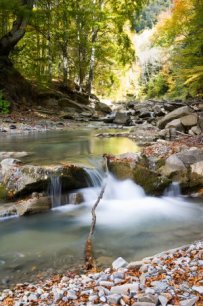
Generosity is the essential and sustaining element that must flow through our faith communities so that they may prosper.  Givers in the congregation are like the tributary streams that flow into the river, carrying fresh supply of vital nutrients and abundant life energy.  At the same time, it is important to remember that financial resources, like water, must continue to flow through the congregation and out into the community in healthy, life-sustaining ways.  For when water is stagnant, it can become unhealthy—at times toxic—and unable to nourish living things.   Faith communities function in similar ways to bodies of water.

Let us consider the waters of the Middle East.  The Jordan River is a major river that diverts water from the Sea of Galilee down through valley between Israel, Palestine, and Jordan.  Thermal springs bring salt to the Sea of Galilee, a body of water teeming with life and vitality.  The Jordan River flows over 150 miles from the Sea of Galilee, carrying six million tons of water to the lowest point on the earth’s surface and with no outlet flow, The Dead Sea.  With evaporation occurring in desert heat and thermal springs around the shores of the Dead Sea, there are high concentrations of salt and magnesium.  Despite these high mineral concentrations and their value as commodities, with no flow of fresh water moving through, the Dead Sea is just that:  a stagnant body of water unable to support life beyond micro-organisms.

As people of faith, we must understand the elemental nature of money and enable its steady flow into and through the congregation.  It is money that provides the energy for the congregation’s mission and the essential nutrients to sustain its ministries, programs, infrastructure, and outreach.

The healthy, well-resourced congregation is like a major river with its currency abundantly supplied by its tributary streams, its givers.  Its ministries flow out into the community, lavishly supplying plentiful resources to its surrounding communities.  Without the in-flow and out-flow of money, our congregations cannot flourish.   Just as environmental stewardship is necessary to effectively manage the world’s natural resources like water, so is congregational stewardship.

Sacred texts, poetry and literature are filled with the imagery and metaphorical wisdom to be gleaned from flowing water.  These offer insight and inspiration for congregations seeking to nurture a culture of generosity and promote giving as a beneficial spiritual practice:


Thou in thy narrow banks art pent:
The stream I love unbounded goes
Through flood and sea and firmament;
Through light, through life, it forward flows.  (
Emerson’s Two Rivers)

                                ~   ~    ~   ~   ~

At times we flow toward the Beloved like a dancing stream.
At times we are still water held in His pitcher.
At times we boil in a pot turning to vapor –
that is the job of the Beloved.    
(Rumi’s One Whisper of the Beloved)

                                ~   ~    ~   ~   ~

You, Blessed One, are my first love.
The love that is always present, always pure, and freshly new.
And I shall never need a love that will be called “last.”
You are the source of well-being flowing through numberless troubled lives, the water from you spiritual stream always pure, as it was in the beginning.                      (
Thich Naht Hahn, Call me by my true names)

                                ~   ~    ~   ~   ~

Like the water of a deep stream,
love is always too much.
We did not make it.
Though we drink till we burst,
we cannot have it all, or want it all.
In its abundance it survives our thirst.  
(Wendell Berry Like the Water)

                                ~   ~    ~   ~   ~

Resources for Nurturing Generosity and Congregational  Stewardship:                          http: //www.uua.org/finance/fundraising/generosity/index.shtml

Shick, Stephen.  Be The Change: Poems, Prayers & Meditations for Peacemakers & Justice Seekers. 2009.  Skinner House Books.  (several readings featuring water imagery.)

Rice, Kayle.  All Rivers Run to the Sea   http://www.uua.org/worship/words/closings/submissions/151326.shtml

Worship Resources, including Water Communion Ceremonies:  http://www.uua.org/worship/holidays/174532.shtml

Water Justice Resources:                                                                                     http://www.uusc.org/environmentaljustice http://www.unicef.org/wash/index_3951.html