A Theology of Money, Giving, and Stewardship in the Covenantal Community

Grateful for the religious pluralism which enriches and enables our faith, we are inspired to deepen our understanding and expand our vision.   As free congregations we enter into this covenant, promising to one another our mutual trust and support.*

Our living tradition draws upon the wisdom and teachings of religions and human experience around the globe and throughout history.  We seek to liberate minds to search for truth and pursue deeper understanding of our world and our place in the universe.   Our Unitarian Universalist principles call us to act in ways that transform lives and ultimately our world for the better.  We stand boldly on the side of love and justice, breaking through barriers of oppression and intolerance.   Our vision of a world community with peace, liberty, and justice for all is an expansive and worthy pursuit.

As Unitarian Universalists, we dedicate ourselves to one another, to promise our mutual trust and support in and among our congregations. It takes a high level commitment of money, time, and leadership to realize our vision and sustain our ministries and programs.  One of the ways we provide support is through our financial giving.   Whether we commit ourselves to a proportion of our income, a weekly contribution through bill pay, or make a generous contribution to the weekly offering, our giving matters.

In community, money flows from and through our interconnected relationships, rich with complexity, attitudes, and motivations.   Money is another form of energy; and at its best, money is dynamic, empowering, and generative, an instrument of transformation.  We do not have to possess a lot of money in order to use what we have in ways that are beneficial and life-sustaining.  Abundance is realized when we appreciate all that comes into our lives and share what we can with intention and good will.   We are blessed and so we are called to be a blessing.

Stewardship is a ministry that involves money and giving.  However, stewardship is much broader in scope than fundraising, and requires a highly relational and pastoral approach in dealing with people and their relationships with money.  Hospitality, careful management of resources, and the pursuit of a clear vision and mission are essential practices in congregations practicing effective stewardship.

Giving and generosity are matters of the spirit and at the heart of stewardship.  Giving is a spiritual discipline, a practice that reflects one’s religious values, spiritual depth and maturity.  Becoming a generous person involves a lifelong, developmental process which begins in infancy and evolves with each experience of receiving and giving.

Giving money tends not to be a rational process; rather it is an emotional response to being asked to contribute or the impulse to give out of gratitude.

Being generous is a way to help take care others and a way to say thank you to the universe for everything we are given.

There is a direct relationship between one’s deepest held values and the motivation to give.  We contribute our time and resources to those things that matter most in our lives.  Therefore, our money and our giving have greater impact when we are intentional about how we express our beliefs and values.       

Bank ledgers and budgets are moral documents and testaments of our values.  Giving grows as commitment grows, and even more often, commitment grows as giving grows.

Our congregations are communities in which the economy of grace invites us all to do all we can with joy and gratitude to be able to offer our gifts.

May it be so.

*An excerpt from the Unitarian Universalist Association’s Covenant to affirm and promote its principles and purposes.  http://www.uua.org/beliefs/principles/index.shtml

With sincere appreciation to Ellen Skagerberg, Rev. Naomi King, Kelley Housman, Jim Mason, Gretchen Haley,  Kelly Belanger Harris, and Rev. Katie Farrell Norris  for the quotes used in this essay (italicized lines), and to the many participants of the UU Stewardship Lab on Facebook, who so generously contribute their ideas and resources.

Money, Life Energy, and the “Faith Factor” In Congregational Giving

One by one, as we decide to change money energy from greed, fear, lack and suffering, into love, joy, abundance, and goodwill, our own circumstances will change for the better….Abundance will begin to flow through our lives. Money will simply be there. (Barbara Wilder)

Let’s face it. Money is a complexity in our lives. We exchange hours of our Life Energy for it in our work for wages. We’d love to receive more of it. We wish we could save enough to feel secure. Sometimes we are reluctant to give it away, but we feel good about it when we do. We can be exhilarated or guilty about spending it, from one moment to the next. Money is a driving force in our lives, like it or not.

Money is energy in form and function, which, at its best, flows through our lives and our relationships, transforming as it goes. Early on, we learn about the practical uses and benefits of having money as the means of providing food, clothing, shelter, and transportation. As we move through our lives we experience giving and generosity as ways to express our deepest-held values. It is the very act of giving that makes money sacred.

As a result of his research, Arthur C. Brooks has describes the “virtuous cycle” charitable giving and increased income and the mutual reinforcement of giving, health, happiness, and prosperity. Charitable giving is pleasurable for the giver. It gives life meaning. People who engage in charitable giving and voluntarism tend to have higher incomes than those who do neither. For example, in data collected for the year 2000, Brooks found that a charitable dollar is associated with $4.35 in extra income. Of the extra income, $3.75 could be directly attributed to the dollar given to the charity.

More and more, people are looking for ways to make a positive difference with their money. In particular, younger generations want their monetary giving to have the greatest impact possible in their wider communities. This is the appeal of offering plate give-away programs in which people contribute to their church and extend their giving to worthy causes beyond.

Paul Schervish of the Center for Wealth and Philanthropy at Boston College has differentiated between demand-side giving and supply-side giving. Demand-side giving has been the expectation historically, focusing on the duty and obligation of giving. In contrast, supply-side giving is rooted in the giver’s identity as a philanthropist whose gifts change lives and bring about positive outcomes. This emerging trend involves the giver’s investment of money and life energy as an expression of their faith identity.

Let’s take a closer look at the role of the faith community in giving patterns…

  • Charitable contributions in the United States topped $290 Billion in 2010,
  • Giving to religion the largest share at thirty-five percent (35%) to total dollars.
  • Of the total dollars, over fifty percent (51.1%) are given by people who are regular church attenders and describe themselves as “strong” or “very strong” in their faith.
  • Simply belonging to a congregation matters, since those who do are more likely to give to the congregation, to secular causes (66%), and to volunteer (44%).

Research clearly indicates the “faith factor” is a significant influence in charitable giving, and giving in congregations. Congregations that reported an increase in attendance over the past five years were most likely to report an increase in their annual fundraising. Another good example of why active participation in religious community and regular attendance to services makes a difference in giving levels and overall financial health.

Congregation leaders must find ways to nurture the giver’s need to give as a spiritual practice, rather than emphasizing the congregation’s need to fund its annual budget. This is a delicate balancing act for congregations trying to strengthen their financial picture. However, in light of the research, encouraging giving in faith communities as beneficial to the giver and the congregation is important to remember.

The first step is to understand how people relate to money at a personal level and engage the conversation in our congregations. The next is to structure our budgets and giving programs around our mission and ministries, emphasizing the difference the congregation makes in the world and how lives are changed for the better. In follow up to these steps, it is important to explicitly connect the individual’s faith identity and values to their financial choices and giving to support their faith community. It is through the alchemy of money, life energy, and faith identity that abundance is realized.

Links for Further Exploration of Money, Life, and Spiritual Practice:

http://www.bc.edu/dam/files/research_sites/cwp/ssi/wcvol4.html#article1

http://www.spiritualityandpractice.com/practices/features.php?id=15783

http://congregationalresources.org/stewardship-suffering-sea-change

Links to the Giving Data and Research:

Giving USA Foundation: http://www.givingusareports.org/

State of the Plate 2011 report by Brian Kluth: http://www.stateoftheplate.info/index.htm

2009 Congregational Economic Impact Study, Alban Institute and Lake Institute: http://www.philanthropy.iupui.edu/LakeFamilyInstitute/docs/2009CongEcoImpact_KeyFindings.pdf

Empty Tomb, Inc. Giving Research: http://www.emptytomb.org/research.html

Books referenced for this blog post:

Brooks, Arthur C. Who Really Cares. Basic Books. 2006.

Wilder, Barbara. Money is Love: Reconnecting to the Sacred Origins of Money. Wild Ox Press. 1999.

Connecting Our Faith and Giving

hearts-and-money_z12k9JYu

Our churches, congregations, and fellowships support, guide, and inspire us in humankind’s greatest quest: that of searching for the fundamental and profound meaning of our lives. We are truly fortunate to live in a time and place where this pursuit can be undertaken freely. Free from political prohibition, free from ostracism, free from material restriction, we can engage with spiritual leaders and investigate philosophies which can guide us in our most important inquiry.

Though we benefit from the legal, social and material freedoms, the religious organizations established to help guide us in our journeys toward understanding could do so much more if we supported them financially to the extent that they support us. According to Christian Smith, Michael O. Emerson, and Patricia Snell, authors of Passing the Plate*, encourage us to ask:

Why is giving not higher among religious people when they have the financial resources and capacity to give at higher levels?

• Why is giving not higher when religious people receive explicit faith teachings and implicit messages to do so?

• Why is giving not higher when religious organizations could achieve the goals that their members profess they desire, particularly when those goals are consistent with the core religious values?

In response, the authors suggest five conditions that could inspire people to give money more generously to their congregation.  Reflect on these and see if they might be applied during your congregation’s stewardship campaign!

• Unambiguously expecting and collectively honoring the generosity of individuals;

• Confidently teaching the instructions of their faith tradition regarding generous financial giving;

• Strongly encouraging members of the religious community to make theologically-informed and principled decisions about and commitments to generous giving;

• Providing multiple, structured and routine means by which people could follow through with their gift; and

• The establishment of better procedures, systems, and practices of transparency, communication and accountability in order to increase trust about how contributions are used.

If you would like to discuss your congregation’s stewardship and fundraising needs, contact me for a free consultation session~

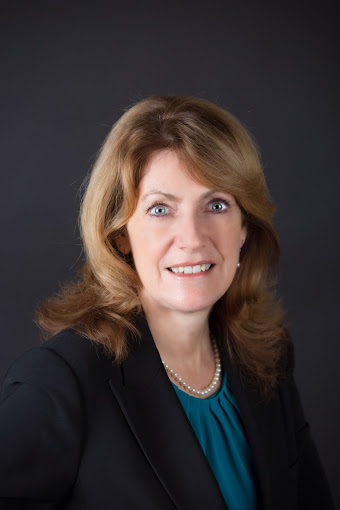
Laurel Amabile portrait 2  Laurel signature

Email:  givingspeaks@gmail.com

Resources:

*Smith, Christian, Emerson, Michael O.  and Snell, Patricia.  Passing the Plate.  Oxford University Press, © 2008

Nurturing Generosity:  http://www.uua.org/finance/fundraising/generosity/index.shtml

Tapestry of Faith–UU Lifespan Curriculum Resources: http://www.uua.org/re/tapestry/index.shtml

Forward Through The Ages (FORTH): http://www.uua.org/finance/fundraising/forth/index.shtml

The Ecumenical Stewardship Center:  https://www.stewardshipresources.org/