Cultivating a Culture of Generosity All Summer Long

As we move into the weeks of the Summer Diaspora, it is a good time to think creatively about a few ways to sustain your congregation’s stewardship efforts, keeping them strong and visible over the next three months.

The participants in the UU Stewardship Lab, a Facebook Group, came up with a few ideas to get our creative juices flowing….

One stewardship leader reports, “The trick to keeping stewardship going over the summer is to make it about being together. Stewardship means caring, and the most important part of caring for our congregation is caring about our fellow congregants. When we do this properly people feel wanted. They know that we really care for them, and they for us. Then the financial part kind of takes care of itself.”

“We’re planning on keeping the ‘Why I pledge’ pulpit testimonials going through the summer. We’re also going to work with the Membership team to discuss annual giving at the classes for new members,”  said another stewardship leader.

“I’ll tell you the great idea our minister (Rev. Chris Bell, UU Congregation of Santa Rosa, CA) proposed: no committee meetings in July. Everybody takes a break at the same time (except Worship Associates, volunteers at our weekly breakfast for the homeless, etc.),” Ellen Skagerberg explains, “which means people serving on several committees get a real break. I think this is our 3rd year doing it now, and everybody looks forward to it.“

“It’s refreshing to take a break sometimes, not drive ourselves quite so hard.” Ellen reminds us.

Garnett Losak, of the Community Church in New York City, shares some of the ideas her stewardship team has successfully implemented in these early weeks of June:

1) Hold a “Summer of FunD” event with $2,500 in matching funds raised for new pledges.  There was a special table during coffee hour, decorated with flowers and a tablecloth. We set out pledge materials: pledge cards, brochures, etc. We raised over $10,000! with the matching funds that’s $12,500!

2) Share lots of information about what we’ve done this year.

3) Affirm choice not to go into our endowment beyond the prudent 4.5% draw.

4) Celebrate the calling of the first woman serving as our Senior Minister –since 1833!

Summer Leadership Retreats may offer an opportunity for the Stewardship Team, congregation lay and professional leaders to spend some time in a more relaxed setting exploring concepts and practices of good stewardship and planning for the next fiscal year.   You may choose a book to read that stimulates new thinking and enlarges the scope of stewardship in the minds of leaders.  There are some great reading and small group study materials to inspire you and your fellow congregants in the recommended resource list at the end of this post.

Think about ways to nurture a culture of gratitude and generosity across the generations during the summer weeks.  For example, you might invite individuals and families to clarify their religious values, reflect upon a higher calling, and engage in faithful stewardship planning.  There are several great workbooks and guidebooks to recommend, designed for children, teenage youth, as well as younger, middle-aged, and older adults.

Invite families to keep a “summer gratitude journal” of their experiences and reflections.  These could be shared as part of a summer vesper service ritual or special worship series later in the fall.  Gratitude inspires giving, so cultivating gratitude in peoples’ lives reinforces the culture of generosity you strive to create all during the church year.

Get creative with your summer stewardship activities, and make them fun and celebratory!

Use the following summer activities to stimulate your imagination for how to connect them with multigenerational stewardship themes:

  • The pot of gold at the end of a rainbow
  • Walking the labyrinth of generosity
  • Abundance of Ice Cream Sunday
  • Flying kites
  • Collecting shells on the beach
  • Hiking to the Mountain Top                        
  • Lemonade and Watermelon
  • Hawaiian Luau
  • The Garden of flowers or vegetables
  • Balloons
  • Ball games
  • Out on (or in) the water
  • Family Picnics

May your summer weeks be filled with abundant gratitude, joy, generosity, and re-creation!


Resources for Small Group Study:

Wright, Lauren Tyler.  Giving—the sacred art, Skylight Paths publishing.  2008.

Free downloadable UU Study Guide for use with Giving—the sacred arthttp://www.uuabookstore.org/productdetails.cfm?PC=1 092

Stewardship:  The Joy of Giving (five session multigenerational curriculum).  2000. UUA.  http://www.uua.org/finance/fundraising/generosity/joy/index.shtml

Resources for Reflection (adults):

Burgess, Gloria.  Dare to Wear Your Soul on the Outside.  2008. Jossey-Bass.

Walker, Cami.  29 Gifts:  How a Month of Giving Can Change Your Life.  Lifelong Books.  2009.

Resources for Younger Generations:

Share Save Spend.  Curriculum series and workbooks for youth and adults.  2005. www.sharesavespend.com

Kidz4Money.  The Mindset of Wealth book series and workshops for young peoplehttp://kidz4money.com/a-mindset-of-wealth/ .

Zeiler, Freddie.  A Kid’s Guide to Giving.  2006.  Innovative Kids.

Legacy Giving and the Beloved Community

 To laugh often and much; to win the respect of intelligent people and the affection of children; to earn the appreciation of honest critics and endure the betrayal of false friends; to appreciate beauty, to find the best in others; to leave the world a bit better, whether by a healthy child, a garden patch or a redeemed social condition; to know even one life has breathed easier because you lived.  This is to have succeeded.

                                                       ~Ralph Waldo Emerson

There are many kinds of gifts that can be given and received.   Gifts can be tangible or intangible, large or small, simple or complex, and everything in between.   The gifts we give may be delivered with pizzazz for all to see, or stealthily without any public recognition.  Our giving may take place at regular intervals throughout our lifetimes, or passed on after we die.   Ultimately, most of us want our giving to make the world a better place.

Giving is a behavior or practice of making a choice to give a gift of money, time, possessions, talent, attention to others.  Our giving is an expression of our deepest-held values and priorities, and at its best, a spiritual practice that benefits others and blesses the world.  It is important to remember that our ability to give and making a positive difference does not require us to be of any particular age or in possession of great wealth.  What is required is a spirit of generosity and a philanthropic mindset.  There are a variety of means and tools available to help us with our giving in all its expressions.

Generosity is a state of being and mindset, with an inner awareness of having enough to share.  Generosity offers a way of living in deep relationship with the world and its inhabitants and expressing gratitude for all that is received.   Faith communities nurture generosity through religious teachings and opportunities for mission- and values-based giving.

Philanthropy derives from the Greek meaning “loving of humankind” and involves one’s actions and giving in support of humanitarian purposes.  Similarly, Charity refers to love of humanity and benevolent goodwill toward others.  Religious organizations and faith communities are uniquely positioned as venues for charitable giving.

Legacy Giving involves giving that is planned during one’s lifetime for the benefit of the people, causes, communities, and organizations beyond their lifetime.  This is done through explicitly stating how one’s money, possessions, or property is to be distributed, such as making a bequest of dollar amounts or percentage of assets.   Religious organizations and local congregations must make planned giving opportunities available to those who care deeply about sustaining their faith and their beloved community into the future.

What we do know from national giving data (USA Giving 2010) is that the majority of charitable dollars are given by individuals (81%), with bequests making up eight percent (8%) of total giving.    The largest proportion of charitable dollars are given to religious organizations, but this share is decreasing with the dramatic increase of other secular and nonprofit organizations competing for financial support.

Mature Americans (age 55 years and older) account for nearly $7 trillion in the following financial categories:

     -80% of all funds in savings,

-77% of America’s financial assets,

-70% of the net worth of all U.S. households

However, only forty percent (40%) of Americans have prepared wills and a mere six percent (6%) have included charitable bequests in their wills.   Our elders whom make up what is known as  the “silent” or “greatest generation” have amassed unprecedented wealth, with much of it held in real estate and retirement plans.

Currently, with the aging of the generations, we are experiencing the greatest transference of wealth ever seen, estimated at $41 trillion.   This is the right time for all congregations and faith-based organizations to establish or strengthen their planned giving programs.  These programs should be carefully structured and managed in keeping with recommended standards and best practices that honor the givers and their intent for their gifts.   There are many planning tools available, and most religious organizations have current information, knowledgeable staff, and giving programs available to assist congregations and individual donors.

It is essential for congregations to nurture generosity inspired by and connected to the values and teachings of the faith, to actively encourage expression of gratitude through intentional giving, and to offer opportunities for the faithful to leave a legacy of benefit to their beloved community.

You can’t do anything about the length of your life, but you can do something about its width and depth. 

                                                                ~Evan Esar

For more information on charitable giving and planned giving programs:

The Unitarian Universalist Association’s Planned Giving Office: http://www.uua.org/giving/planned/index.shtml

For more information about Philanthropic Giving, the Donor Bill of Rights, and Model Standards of Practice for the Charitable Gift Planner:

The Association of Fundraising Professionals:  http://www.afpnet.org/

Partnership for Philanthropic Planning:  http://pppnet.org

The Sharpe Group:   http://www.sharpenet.com/gt/pdfs/2012/may12.pdf

Gathering in Those Remaining Pledges

Many congregations run their annual campaigns in the early spring.  By now, the hope is that all the pledges are collected by now, forecasting an ample supply of dollars for the next year’s funding goals.  In our ideal scene, the budget presented for congregational vote shimmers with abundance and glows with the promise of all that can be accomplished in the coming months.

However, many stewardship leaders report that after the first flurry of pledge returns, things slow down.  Some households in the congregation are difficult to reach and it can be a challenge to gather in all the remaining pledges to wrap up the campaign and fulfill the budgeted income goals.  Congregation leaders wonder….how can we gather in those remaining pledges?

In his book Ask, Thank, Tell, Charles R. Lane offers the following advice about wrapping up the annual campaign:

  • Have the follow-up plans in place before the campaign begins;
  • Consider having one person of the stewardship team to focus on the follow-up
  • Follow-up should occur quickly, within three weeks after the majority of the pledges are in;
  • Send out letters, campaign info, and pledge cards out with an envelope addressed to the church (stamped can help!) for faster return.
  • Stop the contacts after the follow-up letter to avoid perceptions of badgering, which can do more harm than good.

Other ideas for gathering in the remaining pledges include:

  • Send out two email messages, spaced two weeks apart, followed up with a phone call.
  • Provide campaign and pledge updates on your congregation’s website and social media sites, encouraging people to join in with their pledge.
  • Send out a reminder postcard with information about where to find pledge forms or how to pledge online.
  • Announcements in the orders of service or on Sunday mornings.
  • Put pledge cards in the orders of service or in the pews and invite people to fill them out and put them in the offering plate as it comes by.
  • The Minister, Senior Staff, or Elected Leaders make personal contact with all lapsed major donors to check in and encourage another generous pledge.
  • Scheduling small group social events where conversations about the congregation and how the mission, ministry and programs are funded, with pledging information available.
  • Newsletter updates on the annual campaign and ways people can pledge and contribute their financial support—it’s never too late!
  • Small groups and committees that are active in the congregation may provide a means for communicating about the annual campaign—these leaders can help spread the word.
  • If not already available, consider setting up an online pledge form or giving link on your congregation’s website.
  • Don’t forget to have a ready supply of current information about stewardship and annual pledging on your pamphlet racks, on bulletin boards, and at your visitors table for newcomers.
  • Consider a celebration or community social event to catch people’s attention!  An ice cream social after the service or Sunday Brunch may be an enjoyable way to engage people’s support.

If you would like some assistance with planning your next annual funding campaign or with strengthening your year-round stewardship program, let’s connect!  I am here to help you and your organization flourish~

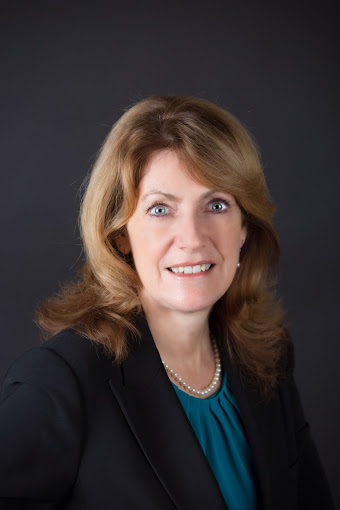
Laurel Amabile portrait 2  Laurel signature

givingspeaks@gmail.com

For more ideas on annual stewardship campaigns:

Clark, Wayne B., PhD.  Beyond Fundraising.  2007.  Unitarian Universalist Association.  http://www.uuabookstore.org

Christopher, J. Clif. Not your Parents’ Offering Plate. 2008. Abingdon Press.

Lane, Charles R. Ask, Thank, Tell.  2006.  Augsburg Fortress.  www.augsburgfortress.org

50 Ways to Improve Your Annual Stewardship: http://www.churchleadership.com/pdfs/50Ways/50_Ways_Annual_Stewardship.pdf