
Our churches, congregations, and fellowships support, guide, and inspire us in humankind’s greatest quest: that of searching for the fundamental and profound meaning of our lives. We are truly fortunate to live in a time and place where this pursuit can be undertaken freely. Free from political prohibition, free from ostracism, free from material restriction, we can engage with spiritual leaders and investigate philosophies which can guide us in our most important inquiry.
Though we benefit from the legal, social and material freedoms, the religious organizations established to help guide us in our journeys toward understanding could do so much more if we supported them financially to the extent that they support us. According to Christian Smith, Michael O. Emerson, and Patricia Snell, authors of Passing the Plate*, encourage us to ask:
• Why is giving not higher among religious people when they have the financial resources and capacity to give at higher levels?
• Why is giving not higher when religious people receive explicit faith teachings and implicit messages to do so?
• Why is giving not higher when religious organizations could achieve the goals that their members profess they desire, particularly when those goals are consistent with the core religious values?
In response, the authors suggest five conditions that could inspire people to give money more generously to their congregation. Reflect on these and see if they might be applied during your congregation’s stewardship campaign!
• Unambiguously expecting and collectively honoring the generosity of individuals;
• Confidently teaching the instructions of their faith tradition regarding generous financial giving;
• Strongly encouraging members of the religious community to make theologically-informed and principled decisions about and commitments to generous giving;
• Providing multiple, structured and routine means by which people could follow through with their gift; and
• The establishment of better procedures, systems, and practices of transparency, communication and accountability in order to increase trust about how contributions are used.
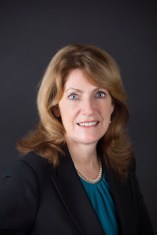
If you would like to discuss your congregation’s stewardship and fundraising needs, contact me for a free consultation session~
Email: givingspeaks@gmail.com
Resources:
*Smith, Christian, Emerson, Michael O. and Snell, Patricia. Passing the Plate. Oxford University Press, © 2008
Nurturing Generosity: http://www.uua.org/finance/fundraising/generosity/index.shtml
Tapestry of Faith–UU Lifespan Curriculum Resources: http://www.uua.org/re/tapestry/index.shtml
Forward Through The Ages (FORTH): http://www.uua.org/finance/fundraising/forth/index.shtml
The Ecumenical Stewardship Center: https://www.stewardshipresources.org/





 givingspeaks.com