Unknown's avatar

About Giving Speaks

I am a stewardship and certified fundraising professional, with a lifespan faith development background. I am a seasoned speaker and workshop leader focusing on topics of generosity, giving, fundraising, stewardship, and leadership.

The Nurturing Tree

Yet another story in the Giving Speaks series–Creating a Giving Culture–One Story at a Time–featuring guest author Dr. Jerry D. Wright*
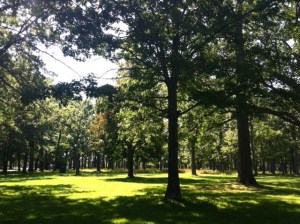
The Nurturing Tree

Once there was a boy who really enjoyed a tree.

He enjoyed the roughness of its bark when he climbed it.

He enjoyed the springiness of its branches when he swung on them.

He enjoyed the crackle, the smell and the pillowy feeling of its leaves when he gathered them into a big pile and jumped into them, in the fall of the year.

He enjoyed the crunch and tart taste of its apples when he bit into its ripe fruit.

And when the sun was hot, he enjoyed sitting in its shade, leaning against its sturdy trunk, thinking about all the things he hoped to do and have and be as he grew older.

The tree enjoyed the boy, too.
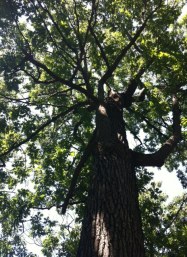
She enjoyed watching him grow stronger, able to do more things.

She enjoyed his company.

She enjoyed being useful.

But there came a long time when the boy stayed away.

Then one day, he returned and said to the tree, “I need some money,” and the tree said, “Well, money doesn’t     grow on trees, but apples do, and you’re welcome to gather my apples and sell them for money.” The tree was delighted to have the boy climbing about, gathering the apples she’d grown. She enjoyed his company and she enjoyed feeling useful.

But then the boy stayed away for a long time, again.

One bright, sunny day the tree saw him coming toward her—older now—a young man—and she was very happy. She really enjoyed his company. She enjoyed that he was bigger and looked stronger than when she had seen him last.

“I want a house,” he told the tree. “A house to live in and raise a family. Would you give me your wood?”

“I’ll give you a few of my branches,” she said, “and you may ask my neighbors for some of theirs. If I gave you all of my branches, I’d have nothing to support my leaves. Without leaves to turn sunlight and water into food, I would die. But as long as you take only a few of my limbs, I can grow others; so, you’re welcome to a few.”

The young man thanked the tree and chose a few of her branches to make into lumber for his house. He also asked her neighbors, who gave him a few branches here and there until he had enough.

Then he built his house and enjoyed it, and was gone for several years, again, until one day the tree recognized him coming toward her—a man in his middle years now, looking healthy and having good energy—and he said to the tree, “I’ve been thinking that I’d like to have a boat to sail on the lake, and I’d like to have your trunk to use for a hull.”

The tree liked the man very much—had liked him since when he was a small boy, climbing her trunk and diving into piles of her leaves—but she liked herself, too, and she said, “I like you a lot. I’ve enjoyed you for years. But I have good reasons to say ‘No’ to your request. First, if I gave you my trunk, I would die, and while I like to give of myself and feel useful, I know better than to give myself away. Secondly, I’ve noticed that you only come around when you want something for yourself. Other than that, I never see you”

“Still, that doesn’t mean you can’t have a boat; you don’t have to have wood to make a boat. Fiberglass is a wonderful material for building a boat. Build yourself a boat of fiberglass. And come visit me from time to time.”

At first, the man wasn’t happy about the tree’s response. Always, before, she had given him at least some of what he had asked for. But then she was right. He did only come see her when he wanted something, and fiberglass was a perfectly good material to use for building a boat.

The more he thought about it, he realized that at first, he and the tree had been giving each other something, but that as time had gone by, the tree had been doing almost all of the giving and he had been doing almost all of the taking.

He decided to take his children to play in, on and around the tree. He also bought some seedlings and showed his children how to plant them, so that the seedlings would grow up to keep the tree company.

Like all living things, the tree grew older and older and finally died, and the keepers of the forest cut her down, leaving only her stump. The man grew older, too, and returned to the tree one day, only to discover that nothing was left of her, but her stump.

She could offer no shade to sit in—no sturdy trunk to lean against—only her stump to sit upon, so the old man sat.
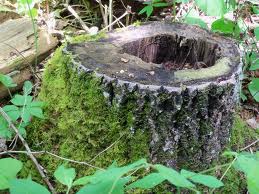
He thanked her for being there when he was a boy, allowing him to climb her sturdy trunk, bounce upon her springy branches, eat her crisp, tart apples, and pounce into piles of her fallen leaves. He thanked her for the shade she had provided, and for being there to lean upon when he just wanted a place to think thoughts and dream dreams. He thanked her, too, for the limbs she spared him for building his house. And then, as he thought some more, he thanked her, most of all, for setting limits and saying “No”—for only allowing him to have some of her limbs—not so many as would have damaged her—and for telling him “No” when he wanted her trunk, which would have killed her. He also thanked her for pointing out that he had fallen into a habit of thinking only of himself—coming around only when he wanted something from her.

He thought a long time.

When it came time for the old man to go, he patted the stump and said,  “Thanks for liking yourself as well as you liked me. I think that liking yourself enough to tell me “No” was the best gift you ever gave me.”

The end.

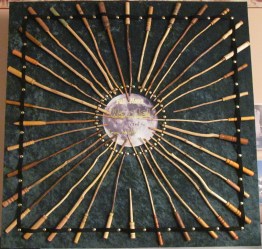
*Dr. Jerry D. Wright preached his first UU sermon in Bloomington, IN, on merger Sunday, when the Unitarians and Universalists merged to form the UUA. Subsequent to graduation from IU, he earned his BD (later MDiv) from Crane Theological School of Tufts University. He was a member of the first class of DsRE to be granted the status of Ministers of Religious Education. In  1989, he earned his DMin from Meadville Lombard . He served in churches in Massachusetts while at Crane; after ordination, he served congregations in New York, Indiana, Illinois, Kentucky, Tennessee, and Texas, before establishing the Inter-District Office of the UUA in Indianapolis, from which he consulted with congregations in Indiana, Michigan, Kentucky and western Ohio. He retired from the UU ministry in 1995, and after retiring in 2010 from doing data analysis for a hospital, amuses himself with photography and the crafting of “magic” wands (see display photo below).  To contact Dr. Jerry Wright directly:  drwright8706@sbcglobal.net
Resources for Environmental Justice & Stewardship:

Unitarian Universalist Association: What is Environmental Justice?  http://www.uua.org/environment/27663.shtml

Green Sanctuary Program:  http://www.uua.org/environment/sanctuary/index.shtml

Ethical Eating Resources:  http://www.uua.org/environment/eating/index.shtml

Climate Change & Global Warming information:  http://www.uua.org/environment/climate/index.shtml

Sustainable Local Economies:  http://www.uua.org/environment/sustainable/index.shtml

Resources for Nurturing A Healthy Culture of Giving and Generosity:                                                                                                  http://www.uua.org/finance/fundraising/generosity/index.shtml

Giving–the sacred art (book by Lauren Tyler Wright) and Study Guide for Giving–the sacred art for small groups  (by Laurel Amabile)                 http://www.uua.org/documents/stew-dev/study_guide_giving.pdf

UUA Congregational Stewardship Services:  http://www.uua.org/finance/fundraising/index.shtml

Forward Through the Ages (FORTH) Program:  http://www.uua.org/finance/fundraising/forth/index.shtml

Ecumenical Stewardship Center:  A Network For Growing Stewards   http://stewardshipresources.org/

A Garden of Generosity

Another in the Creating a Giving Culture, One Story at a Time series….

ANN’S GARDEN:    A Story of Generosity by Frankie Price-Stern*

My husband and I moved to Chapel Hill in 1994 and immediately started attending Community Church.  It was not long before I met Ann.

My early time in Chapel Hill was very difficult and Ann became a wonderful and supportive friend in so many ways.  Along the way she introduced me to the church financial work she did, then pushed me into church financial leadership, and finally five years later nominated me for Board Chair.  This was my start in the stewardship ministry that has become a large part of my life today.

I have discovered at least one Ann in most of my client congregations. Many of them are older like Ann with an abundance of white hair.  Whatever their age their eyes have stayed young – eyes that almost always sparkle with the optimism, acceptance and hope that are so much a part of our faith.  When I met her Ann may have been sixty-five years old on the outside but it seemed through her eyes you could still see her as she was at seventeen.

Ann had a garden.  She and her husband had moved into their house thirty years earlier and they had raised their family there.  When she first moved to Chapel Hill Ann had set one rule for her garden.  She would never buy a plant.  Instead she decided to ask each of the new friends as she got to know them for a gift of a plant from their garden for her garden. As she accepted gifts from friends she would plant them where she thought best, and  continued to move them around until she found just the spot where a plant would flourish, thrive and make its best contribution to the beauty of the garden.  Rule two came soon after her garden started filling in – if you gave her gift of a plant from your garden, she would insist that you accept a gift from hers.

As you can imagine after thirty years Ann’s garden was wonderful – full of all sorts of unique wonders to discover.  For her friends had most often shared their favorite and special plants with her.

Ann became ill in 2001.  On a beautiful spring afternoon my husband and I decided to go over to Ann’s house and give a little back for all that her friendship had given us.  We started to weed her garden.  After a while Ann came out and we together slowly walked around for forty-five minutes.  She told us about each plant.  She told us the story of many friends who were still here, friends that had moved and friends that had passed.  She told us of some plants’ journeys around her garden until they arrived at their final spot.  And sometimes she told us how she had selected just the right plant to give to a new friend when they gave her their plant.  On a beautiful spring day Ann told us the story of her life through her garden, her friends, the gifts they had given each other, and the care she had taken with every plant she received.  Once again as often happened, we had tried to give Ann a gift, and had received so much more from her.                 

Maybe Ann suspected that day would be one of our last visits, but less than a week later she died unexpectedly.  There were 350 people at her memorial service – our church membership was only 275 at that time.  A year later we held a memorial ceremony after church.  Everyone was asked to bring a plant from their garden.  We went back to Memorial Rock where Ann’s ashes were scattered and planted them. And I am absolutely sure, liked mine, at least a few of the plants that today flourish in our memorial garden have grown from cuttings from plants that had grown from cuttings from Ann’s garden.

*Frankie Price Stern (http://www.linkedin.com/pub/frankie-price-stern/2a/203/b17) has been an active UUA Congregational Stewardship Consultant, UUA Compensation Consultant, and lay leader at the Community Church Unitarian Universalist in Chapel Hill, NC for many years.  Frankie also serves as a board member for the North Carolina Therapeutic Riding Center (http://nctrcriders.org/id13.html), an organization near and dear to her heart.                                                            Frankie adds this note to her story:  “I am hoping people get from the story that stewardship is a lifelong strategy full of joy, not a dreaded once a year response to being asked to give.”

For more information about the UUA’s Congregational Stewardship Services program: http://www.uua.org/finance/fundraising/index.shtml

Resources for Congregational Memorial Gardens

Many congregations design and create beautiful memorial gardens as part of their planned giving programs:                                              http://pss.uvm.edu/ppp/articles/memorial.html

Memorial Gardens for Unitarian Universalists are found at many congregations and conference sites:

Google Search “Memorial Gardens Unitarian Universalist” (or any other faith organization or denomination) and you will find myriad links.

Amherst, NY:   http://www.uuamherst.org/newsletter-part-2?start=2

Star Island:  http://starisland.org/donating/memorial-courtyard/  (contact Angela Matthews, Director of Development, amatthews@starisland.org)

Ferry Beach Association:  http://ferrybeach.org/giving/endowment.html

Virtual Memorial Garden at Davies Memorial UU Church:  http://www.dmuuc.org/virtual_memorials/#axzz23j7XRRda

Sample Memorial Garden Policies:

Click to access memGardenPolicy.pdf

Resources for Memorial Services and Life Celebration Rituals:

Searl, Edward.  In Memoriam, 2nd Edition.  Skinner House Books.  2000.

York, Sarah.  Remembering Well.  Jossey-Bass. 2000.

Worship Web   http://www.uua.org/worship/

Hands of Compassion and Giving

(Another in the stories and generosity series…by Laurel Amabile)

Compassion is the most wonderful and precious thing.  When we talk about compassion, it is encouraging to note that basic human nature is, I believe, compassionate and gentle.  Sometimes I argue with friends who believe that human nature is more negative and aggressive.  I argue that if you study the structure of the human body you will see that it is akin to those species of mammals whose way of life is more gentle or peaceful.  Sometimes I half joke that our hands are arranged in such a manner that they are good for hugging, rather than hitting.  If our hands were mainly meant for hitting, then these beautiful fingers would not be necessary….Just as you see that with the palm of our hand all five fingers become useful, if these fingers were not connected to the palm they would be useless.        ~The Dalai Lama

Our hands are a unique quality of human beings, for no two are exactly alike.  Take a moment and look at your own hands.  Now look at your neighbors.  Note their size, their shape, color, and markings.  Think of all the wonderful things our hands and fingers can do for us.  Our hands follow our thoughts and act on our intentions.  They fulfill our needs and express our ideas.  Our challenge is to connect our hands not only to our heads and our thoughts, but also to our hearts, where compassion and love reside.

I invite you now to reflect on the hands of those people in your life who have nurtured you, taught you, offered you help, or given you a gift.  Experience the feelings associated with the memories of those special hands that have touched and blessed your life.

As infants it takes us a while to realize that our hands are part of us, not just the curious things that move about in front of us or stick into our mouths.  We learn that our hands have the ability to operate in response to our thoughts. We learn of their amazing capacity to do things:  to hold onto things, to help us stand up, play with toys, feed ourselves, or stroke an animal’s fur.  We learn that our hands can help us express our feelings non-verbally: to show affection, anger, and anxiety.   We delight in expressing ourselves creatively with our hands:  to swirl and squiggle finger paint, to draw a picture, or to write a story.

Ask a child a piece of paper and a pen or marker and invite them to draw a picture.  When the child is done drawing, ask him or her to tell you about their creation.  Most children are eager to explain what they have created and more than happy to give their drawing to someone who admires it.  It seems so easy for children to be generous in that way, to find joy in giving what they have to give.

One special gift I received about ten years ago was from Julian, a boy who was in my daughter’s fourth grade class at the elementary school.  Julian was barely making it in school.  He had significant behavioral and learning issues.  I was a volunteer tutor in the schools and spent a good amount of time with Julian during and after school, helping him with his reading and math.  Truthfully, I didn’t know how much of a difference I could make in Julian’s life, his challenges were so great.

At the time I met Julian, he was living with his Grandma Sally.  Julian’s mother was dealing with chronic addiction issues and not an active part of his life.  His father was unable to work due to serious health issues.  Not long after I met Julian, his Grandma Sally was diagnosed with cancer and did not live long.

Julian and his brothers went to live with their dad in one of the city’s subsidized housing complexes.  Drug dealing was a way of life and happening just outside their front door.  There was a loose and undependable network of support for Julian and his family, at best.

One year, coming up on Mother’s Day, Julian’s art class was given the materials to make a special pin for their mothers:  aluminum foil wrapped around the cardboard letters M-O-M, made to look like silver, with a jewelry pin glued on the back.  With a big smile on his face and no words of explanation, Julian gave me the MOM pin he had made.  I cried.  I cried for the child who was expected to perform a task not in keeping with the harsh reality of his life without a mother.   I cried for loss I knew Julian felt, but that I could never fix or begin to fill.  I cried for this fragile child’s courageous act of generosity and affection.

Over time we come to understand that our hands and the hands of others have many powers:  to help and to hinder, to protect and to harm, to heal and to hurt, to construct and destroy, welcome and to push away.   This growing awareness forces us to choose how our hands will act and react on our behalf.

Now more than ever, it is essential that we remain hopeful, to express the compassion we feel for others through our attitudes and actions, and to open our hands to give in service and share our abundance.  We cannot allow ourselves to be immobilized by circumstances beyond our control, but to act from that place of love, courage, generosity, and commitment that resides deep within our souls.

May it be so.

Resources for Teaching and Practicing Compassion and Generosity:

Armstrong, Karen.  12 Steps to a Compassionate Life.  2010.

The Charter for Compassion:  http://charterforcompassion.org/the-charter

Passing on the Values to the Next Generation:                                                                                                                                               http://www.genspring.com/documents/Passing-on-Values-to-the-Next-Generation-Ellen-Perry-GenSpring.pdf

With Justice and Compassion:   http://www.uua.org/immigration/re/192346.shtml

UU Peacemakers:  http://www.uupeacemakers.org/

Inspiration for the Journey:

Rev. Naomi King     http://thewonderment.typepad.com/the_wonderment/

Rev. Roger Jones    http://ironicschmoozer.wordpress.com/

Barry Sanders        http://gatheredbythefire.org/

Paul Mark Sutherland   http://gyatoday.wordpress.com/

Compassion–The Buddha (PBS):  http://www.pbs.org/thebuddha/compassion/

Supports for Caregivers and Community-builders:

Helene J. Powers:  http://helenepowers.com/writing.html